


How Does a Home Security System Work?
Protecting Your Home and Potentially Lowering Your Insurance Costs
Investing in a home security system is one of the most effective precautions a homeowner can take to reduce the likelihood of a break-in. Understanding the six fundamental components of a residential alarm system and how they work together can help you make informed decisions about protecting your home and family.
The Statistics Don’t Lie
There are many things that might make a home a tempting target for a burglar—an overflowing mailbox, poorly lit entrances, or overgrown shrubbery. However, the most enticing home to a burglar is typically one without a home security system.
Research shows that residences without this type of protective shield are 300% more likely to be burglarized than those that have one.
Given the level of safety and peace of mind a home security system can provide, it’s worth understanding how this technology works and why it has proven so successful in protecting properties from break-ins.
6 Key Components Of A Home Security System
Homeowners have a wide selection of home security systems to choose from, including professionally installed or DIY options, wired or wireless, and professionally or self-monitored. Despite this variety, most systems include similar components that work together to comprehensively monitor a property and protect it against intruders:
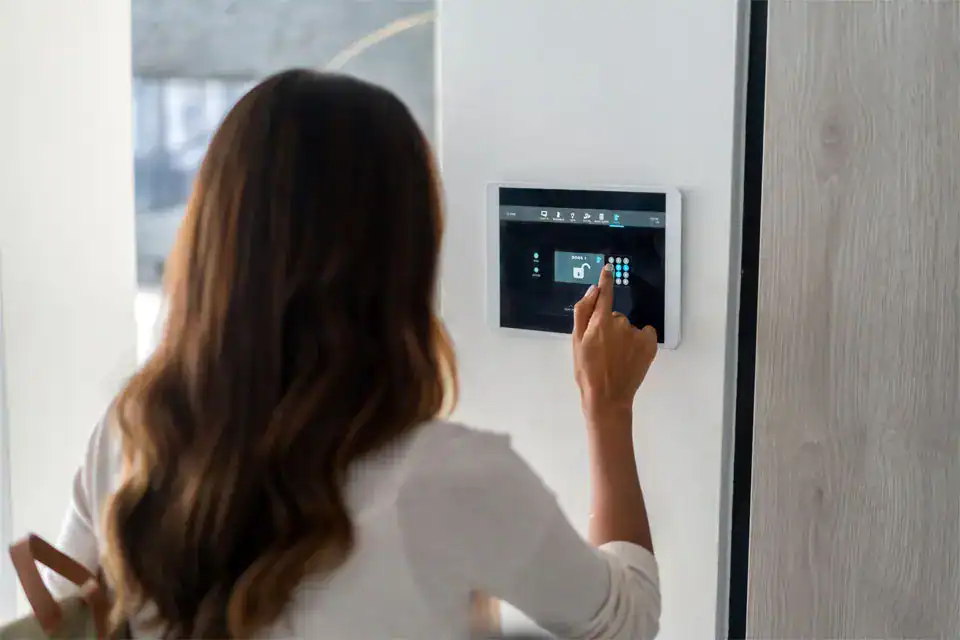
1) The Control Panel
Though typically just a small touchpad, this panel is the “brain” of the operation. It allows you to access your entire security system, arm and disarm it, set up communication with other devices on your home network, sound an alert in an emergency, and more. The control panel’s primary role is to receive signals from triggered home security devices and then send an alert to your professional monitoring service or directly to your smart device.
2) Entryway Sensors
Burglars generally take the easiest route available when breaking into a house. In many cases, this means going straight through an unlocked or poorly secured front or back door or first-floor window. Entryway sensors protect these areas using two magnetic pieces—one that attaches to a door or window and another that attaches to a door frame or windowsill. When a door or window is closed, these two parts come together to form a complete circuit. If a door or window is opened, that circuit is broken, causing the sensor to send an alert to the control panel.
3) Glass Break Sensors
A cunning burglar may try to avoid setting off a home security alarm by breaking through a window or sliding glass door. Since entryway sensors will not pick up this type of intrusion, glass break sensors are an essential element of home security systems. There are two types: one has an audio microphone triggered by the decibel level of breaking glass, while the other detects vibrations or movements when glass is shattered.
4) Motion Sensors
These sensors detect unusual movement using two types of technology: passive infrared technology, which senses changes in room temperature by detecting body heat, or microwave technology, which emits undetectable waves that catch reflections off moving objects. While the primary benefit is alerting your home alarm system to possible intruders, these sensors can also track the comings and goings of family members—including pets.
5) High-Decibel Siren Alarm
This is the painfully loud, high-pitched sound you hear when a home security system sensor is triggered. The decibel level for these alarms typically ranges from 100 to 130—comparable to the volume of an ambulance siren or a jet airplane taking off at close range. These high-decibel sirens not only effectively warn anyone nearby that there is an issue in your home, but they also typically stop burglars in their tracks and scare them off.
6) Yard Signs and Window Stickers
Whether your home security system is professionally installed and monitored or you opt for a DIY kit, it usually comes with yard signs and window stickers. Don’t underestimate the power of these components to discourage a burglar. Just the sight of a sign or sticker with the logo of a reputable home security company is often enough to keep a potential intruder from trying to break into your home.
Is A Home Security System Worth The Investment?
From porch pirates and trespassers to vandals and burglars, investing in a home security system is a proven method to detect and deter criminal activity on your property. But the benefits extend beyond just security—having a home alarm system may also make you eligible for a discount on your homeowners insurance premium.
Many insurance companies, including those we work with at Risk Strategies ICNJ, offer credits for homes equipped with monitored security systems, smoke detectors, burglar alarms, and other protective devices. These discounts recognize that security systems significantly reduce the likelihood of claims, making your home a lower risk to insure.
When selecting a security system, consider factors such as your home’s layout, your budget, whether you prefer professional monitoring or self-monitoring, and the specific features that matter most to your family’s safety and peace of mind.
We’re Here to Help
At Risk Strategies ICNJ, our goal is to support you in protecting what matters most. Whether you’re looking to understand how security systems might affect your insurance coverage, need help evaluating your current policy, or want to explore available discounts for protective devices in your home, we’re here to guide you every step of the way.
Contact us anytime: info@icnj.com or 201-525-1100
Sources:
https://www.andovercompanies.com/insight/how-home-security-systems-work
https://www.alarms.org/burglary-statistics/
https://www.gelighting.com/inform/how-motion-sensors-work
https://www.mdhearingaid.com/blog/decibel-chart
https://staysafe.org/home-security-systems-enhancing-safety-and-burglary-prevention/