


Everything You Need to Know About Protecting Your Home from Ice Dams
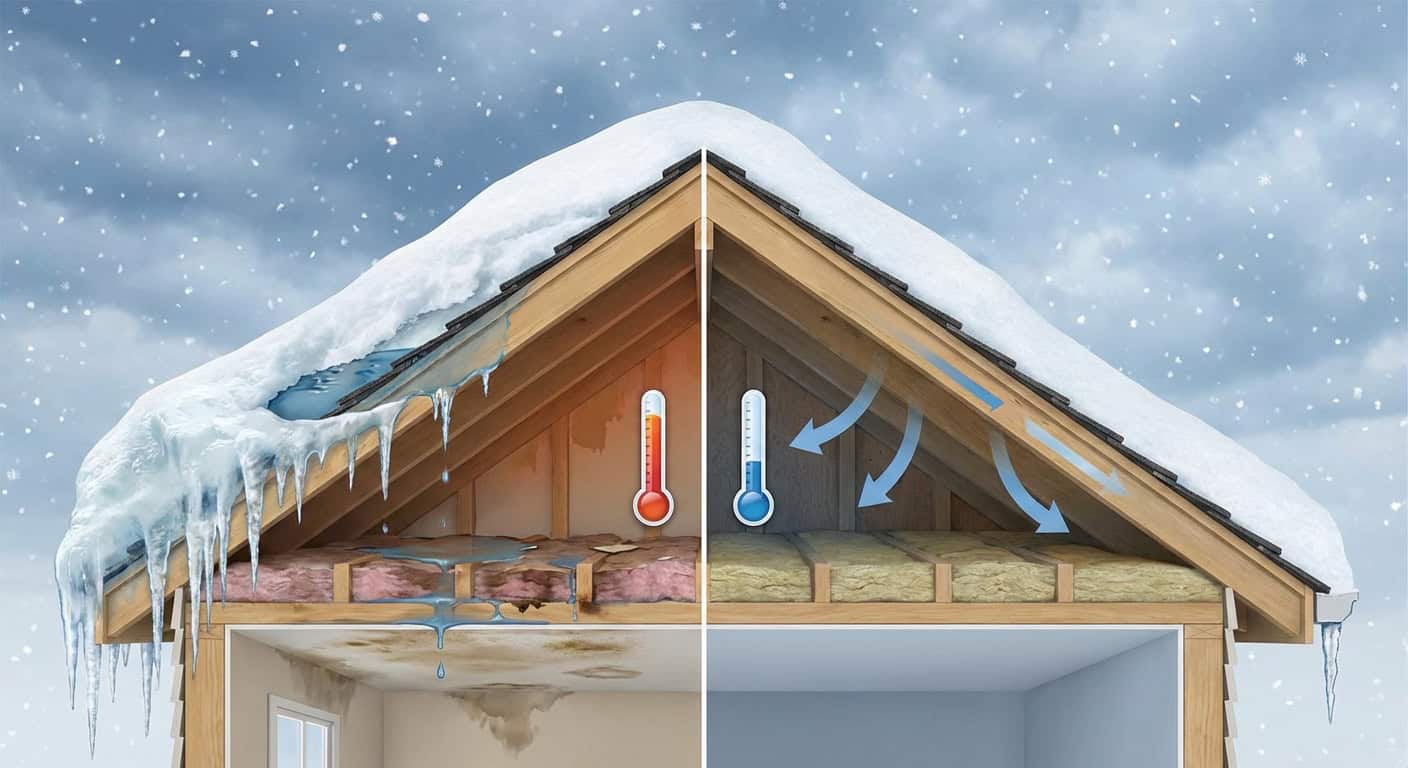
Harsh winter weather can do more than just make driving difficult — it can cause serious damage to your home. One of the most common and least understood winter hazards is the ice dam.
Ice dams form quickly, cause expensive damage, and often go unnoticed until water is already leaking into your home. Understanding how they form and how to prevent them can help you avoid costly repairs.
What Is an Ice Dam?
An ice dam is a ridge of ice that forms along the edge of your roof. It blocks melting snow from draining properly, causing water to back up under shingles and into your home.
This can lead to:
- Interior water damage
- Damaged insulation
- Mold growth
- Peeling paint
- Warped flooring
- Ceiling stains
In severe cases, structural damage can occur.
How Do Ice Dams Form?
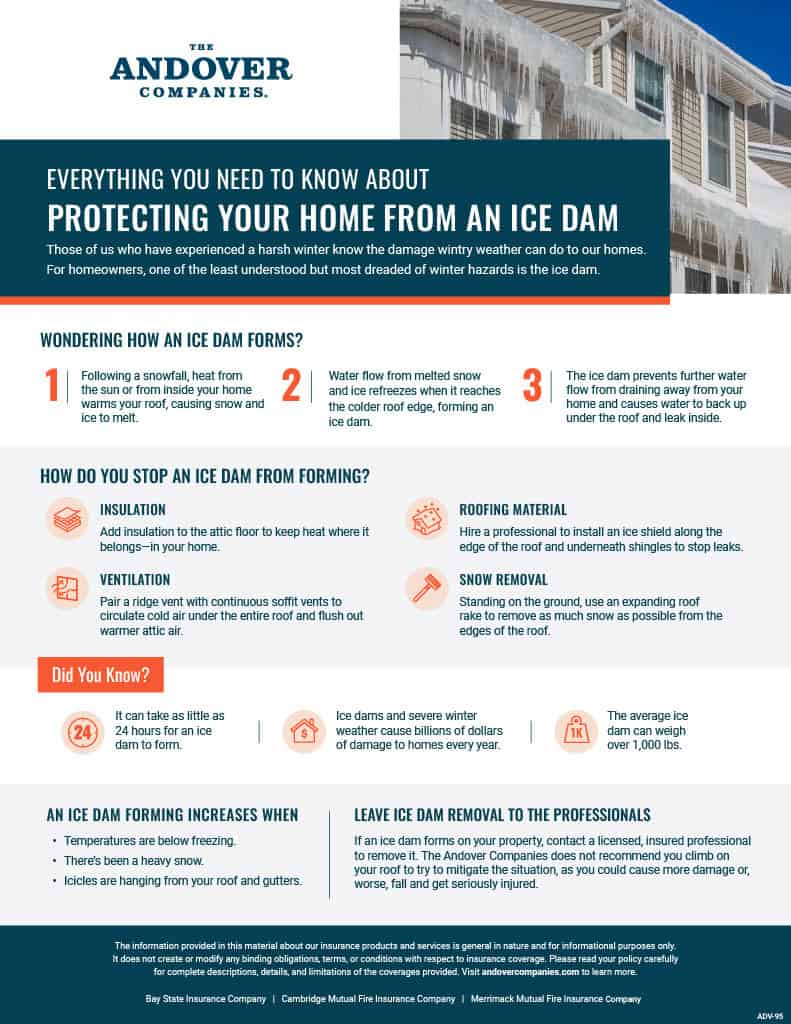
Ice dams typically develop in three steps:
- After a snowfall, heat from the sun or from inside your home warms the roof, causing snow and ice to melt.
- The melted water flows down the roof toward the colder eaves.
- When it reaches the colder roof edge, it refreezes, forming a ridge of ice.
As this ridge builds up, it prevents additional melted snow from draining off the roof. The trapped water backs up under the shingles and can leak into your home.
It can take as little as 24 hours for an ice dam to form under the right conditions.
To better understand how ice dams develop and why they cause damage, take a look at this helpful visual guide:
Conditions That Increase Ice Dam Risk
Ice dams are more likely when:
- Temperatures remain below freezing
- There has been heavy snowfall
- Icicles are hanging from your roof or gutters
Icicles may look harmless, but they are often a warning sign that melting and refreezing are already happening.
Ice dams can weigh over 1,000 pounds, adding significant stress to your roof system.
How to Prevent Ice Dams
The key to prevention is controlling heat loss and improving airflow.
1. Improve Attic Insulation
Adding insulation to your attic floor helps keep warm air inside your living space instead of escaping into the attic. Less heat escaping means less melting snow on the roof.
2. Improve Roof Ventilation
Proper ventilation helps maintain a consistent roof temperature. Pairing a ridge vent with continuous soffit vents allows cold air to circulate under the roof and push warmer attic air out.
This reduces uneven melting that leads to refreezing at the eaves.
3. Install Ice and Water Shield
A professional roofer can install an ice and water barrier beneath shingles along the roof edge. This extra layer of protection helps prevent water from seeping into your home if an ice dam does form.
4. Safely Remove Snow
After heavy snowfall, use a roof rake from the ground to remove snow from the edges of your roof. Removing excess snow reduces the amount of melting and refreezing.
Never climb onto your roof to remove snow or ice yourself. This can be extremely dangerous and may cause additional damage.
If an Ice Dam Has Already Formed
If you notice signs of an ice dam or water intrusion:
- Do not climb on your roof
- Do not attempt to chip away ice
- Contact a licensed and insured professional
Trying to remove ice yourself can damage shingles and create additional leaks — and the risk of falling is significant.
Does Home Insurance Cover Ice Dam Damage?
In many cases, homeowners insurance may cover water damage caused by ice dams if the damage is sudden and accidental. However, coverage depends on your specific policy and the circumstances of the loss.
Damage caused by lack of maintenance or long-term neglect may not be covered.
The best approach is prevention — but it’s also important to understand exactly what your policy includes before winter weather hits.
Protect Your Home This Winter
Ice dams cause billions of dollars in damage to homes each year. A little preparation now can save you significant stress and expense later.
If you have questions about your homeowners coverage or want to review your policy before winter, our team at Risk Strategies ICNJ is here to help.